
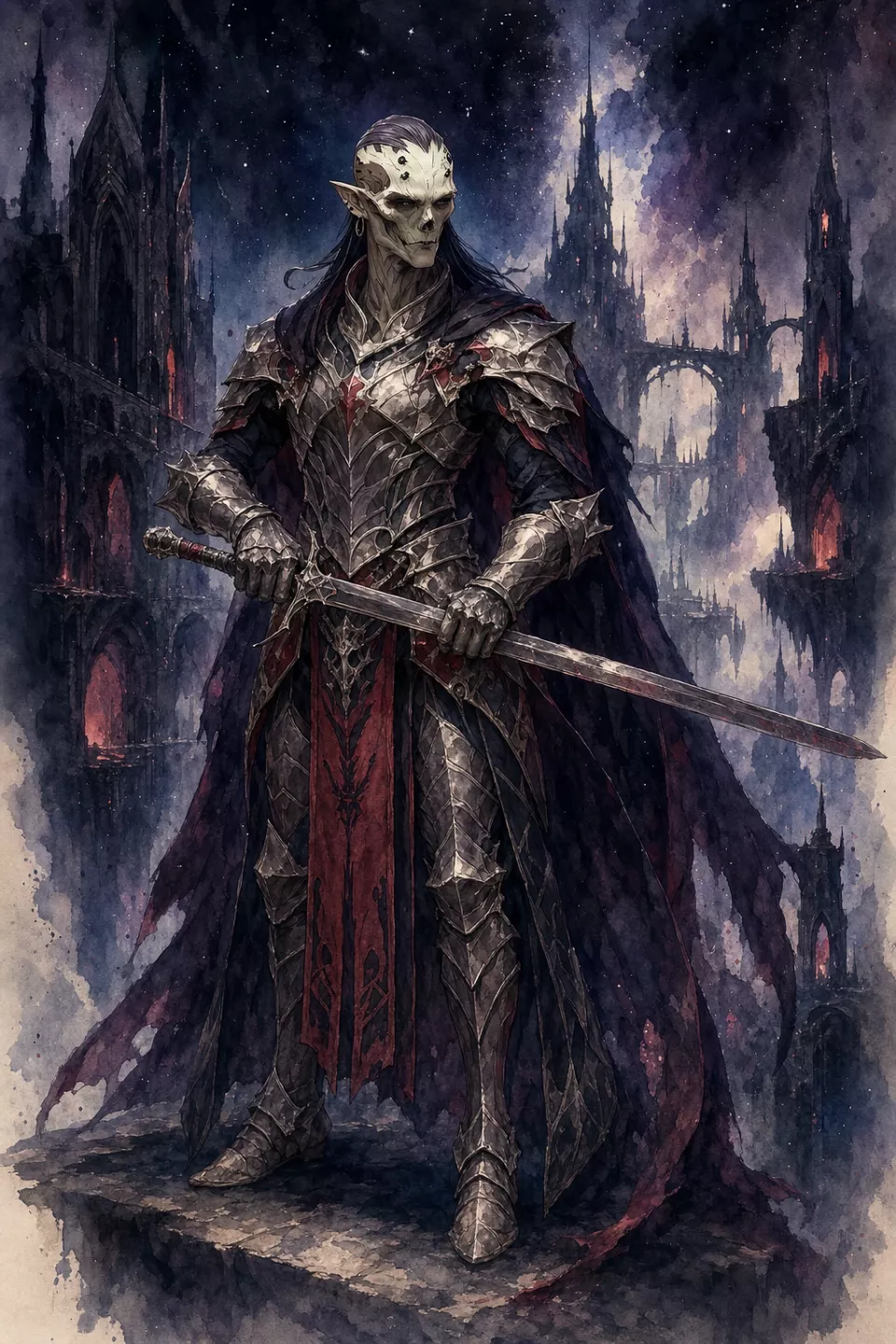
Ashkor Vrynn
Githyanki, Fighter, Neutral
Description
Ashkor Vrynn is tall and spare, with the long limbs and sharp, angular features of a githyanki forged for war. Mustard-gray skin stretches taut across high cheekbones, a narrow nose, and a ridged brow. His black hair is shaved close at the sides and tied into a short warrior’s tail, exposing pointed ears and a row of silver studs. He wears dark red scale armor over a black quilted coat, each plate polished at the edges by years of use. A battered longsword hangs at his left hip, its plain iron guard wrapped in faded violet cord. He stands perfectly still until action comes, watching every hand and doorway with cold, disciplined patience.
Backstory
Ashkor Vrynn was hatched aboard a githyanki warship that raided the silver roads between worlds. His first lessons were not letters or prayers, but how to brace against a ship’s turning deck and where to place a blade beneath a creature’s ribs. At fourteen, he received his first sword: plain iron, too heavy for his narrow arms, with violet cord wound around its guard by his older sister, Veyra.
Veyra died during a raid on a ruined fortress in the Astral Sea. Their commander ordered the younger warriors forward, then sealed the gate behind them when the defenders counterattacked. Ashkor survived three days without food, drinking condensation from the stones and killing only when he had no other choice. When the gate finally opened, he found Veyra’s cord tangled around a broken spear. He wrapped it around his own sword and never replaced it.
Ashkor served the warband for years, obeying every order until a captain commanded him to burn a village that had surrendered. He lowered his torch instead. The captain called it weakness; Ashkor called it waste. Their duel ended with the captain disarmed and Ashkor exiled rather than executed, his rank and ship taken from him.
Now he sells his blade from one hard-bought contract to the next, traveling beneath unfamiliar stars. He watches doors, hands, and escape routes before he studies a face. Ashkor claims he wants only coin and a quiet death, but he still seeks the commander who sealed that fortress—and the truth of whether Veyra’s death was planned.
Personality
Ashkor speaks in short, exact sentences, trimming every story down to what a person needs to know. He dislikes boasts, riddles, and anyone who gives an order without naming the cost. In a tavern, he chooses a seat with a wall at his back and pays for his drink before removing his gloves. He rarely offers trust, but he offers clear terms: the price, the danger, and the point at which he will walk away.
He respects competence wherever he finds it—in a soldier who holds a line, a cook who stretches poor supplies, or a merchant who admits a bad bargain. He has no patience for cruelty disguised as discipline. Once an enemy drops a weapon or accepts surrender, Ashkor treats the agreement as binding, even when breaking it would be safer. He will not call this mercy. To him, mercy is a choice made for another person; a promise is a debt owed to oneself.
Anger makes him quieter rather than louder. He rolls the violet cord around his sword guard beneath one thumb when someone invokes rank, sacrifice, or duty to excuse needless deaths. Praise leaves him suspicious, while a sincere apology can unsettle him for an entire evening. He shows affection by repairing buckles, sharpening blades, and standing the first watch without being asked. When a companion makes him laugh, he looks away at once and pretends to have coughed.