
Durg
Bugbear, Fighter, Lawful Evil
Description
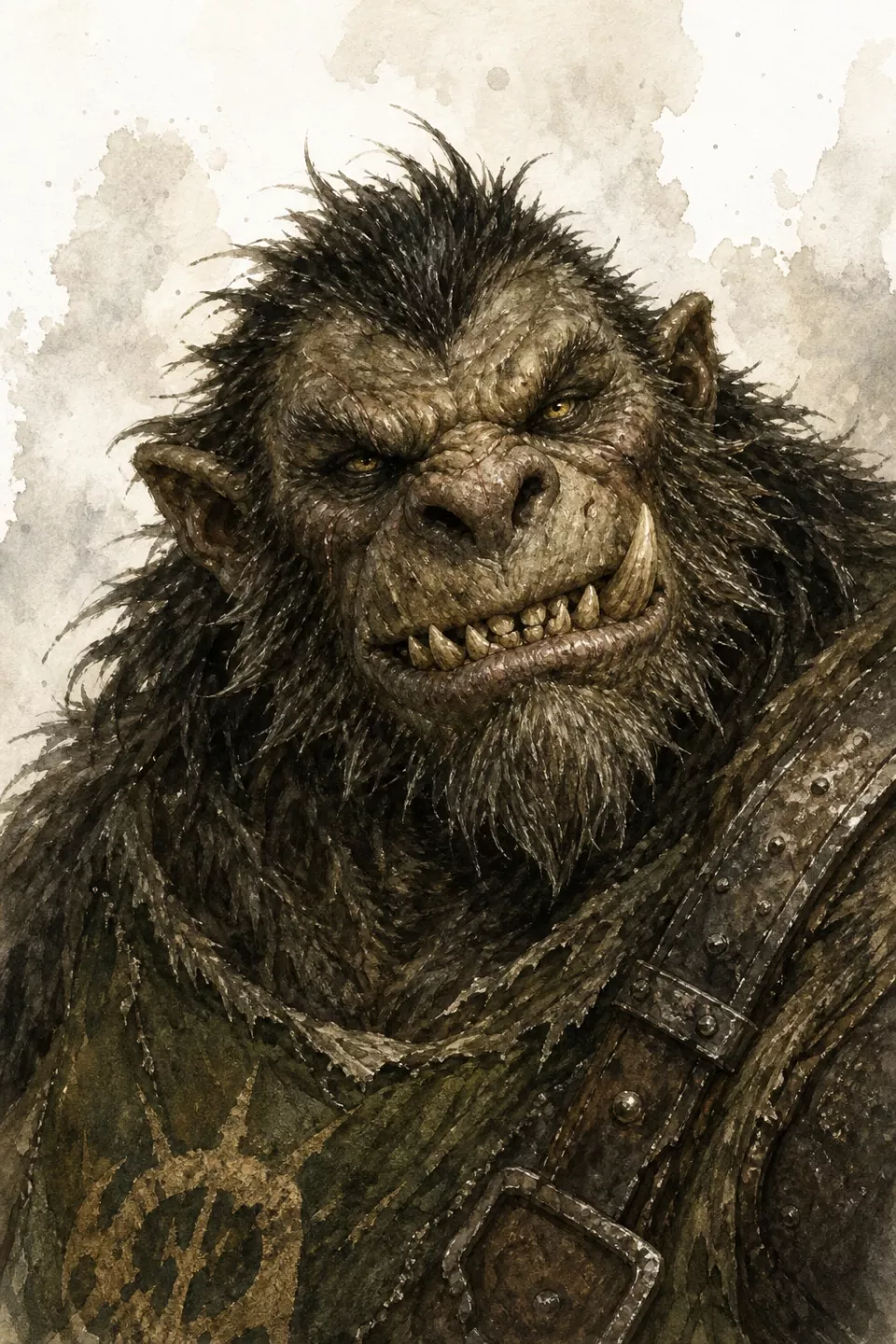
Durg stands a head taller than most bugbears, built like a walking siege engine—thick through the shoulders, heavy in the forearms, with corded muscle under hide that looks permanently sun-browned and dusty, as if he never quite leaves the churn of campfires and road grit. His fur is a mottled gray-green with darker streaks along the spine; when he moves, the longer hairs catch light like bristled wire. His arms hang low and forward, knuckles scraping when he takes long steps, and his feet are planted wide, boots or leather wraps flexing around oversized toes for a grounded, battering-ram stance.
His face is where the threat lands. A broad, evil grin splits his muzzle from cheek to cheek, exposing uneven, yellowed fangs—some worn down flat from use, others jagged as if broken and never repaired. One tusk curves slightly outward, catching every glance. His nose is flat and flared, with two faint scars crossing the bridge, and his eyes—small but bright—sit deep under heavy brow ridges that make his stare feel like a lock clicking shut. When he’s angry or amused, his nostrils flare and the grin stretches wider, showing gums with dark, dried stains like he’s chewed stone and teeth alike.
Durg wears a medieval tabard over tough hide and layered leather straps, cinched tight across his chest and shoulders so it hangs straight when he stands over someone. The fabric is a dull, battlefield-stained color, faded at the hem and rubbed raw at the collar. Sewn into it are patches that look less decorative than practical: stitched symbols of discipline—simple bars and hooks—marked with old scorch marks where he’s taken blows and refused to fall. A broad leather baldric crosses his torso, keeping his mattock at reach even while he circles.
His weapon is a mattock sized for his bulk. The head is thick and iron-dark, with a worn edge on the pick side and a broad, chipped blade side ready for digging through earth or smashing ribs. The handle is reinforced with metal bands near the haft, and the grip is wrapped in cracked leather that smells faintly of oil and sweat. He carries it low in one hand and shifts his weight so the mattock’s head points like a threat—toward feet, toward doors, toward whatever he decides is “owed.”
People remember how he holds himself. Durg’s posture is rigid where others slacken—shoulders squared, chin slightly lifted—like he’s always measuring space for violence. When he thinks, his thumb drags once along the leather wrap of the mattock handle, leaving a faint squeak against worn hide. He makes his presence known before he speaks: a slow, deliberate crunch of boots on gravel, a soft scrape of his claws when he stops, and a low breath through his bared teeth that never quite becomes a growl.
His menacing appearance is completed with small, telling details: wrist guards patched from multiple scraps of armor, a belt of pouches that hang too heavy for the empty road, and faint grime under his nails as if he’s been digging for days. When he finally smiles at you—when that wide grin lifts and the fangs show—there’s nothing playful in it. It’s the look of a lawful enforcer who believes the world is a ledger, and he’s already decided what you owe.